
🎹 How to Motivate Your Child to Practice Piano Without Taking Exams
When I was in secondary school, I used to hang out 2 very close friends, both of whom also plays the piano. I still remember that I used to have a ‘disagreement’ with one of them – she being the more logical and realistic one, thinks that one should learn piano for exams; and that there is no reason to learn piano if not for exams. For me, whose heart rules more than my mind, I disagreed. As my first motivation to learn the piano was after hearing a recording of a lounge pianist play pop music, I believe that interest comes first before exams. In the end, out of the three of us, only one managed to finish grade 8 – guess who? The friend who disagreed with me stopped lessons at grade 6 and never resumed, while the other one stopped at grade 5 and resumed only more than 20 years later.
For many parents, music exams seem like the natural path to keep their child progressing in piano. But what if your child isn’t motivated by grades or certificates? What if the pressure of exams dampens their love for music? The good news is: exams aren’t the only way to
inspire consistent, joyful piano practice. In fact, many children thrive when learning is rooted in curiosity, creativity, and connection.
Here’s how you can nurture your child’s musical journey—no exams required.
🎶 1. Focus on the Joy of Music
Children are naturally drawn to things that feel fun and rewarding. Instead of emphasizing achievement, help them discover the pleasure of playing.
- Let them choose pieces they love—whether it’s a Disney tune, a pop song, or a video game theme. <Aurelia playing Let It Go during her birthday party>
- Create a “piano playlist” together of songs they’d like to learn.
- Talk about how music makes them feel. Does this piece sound happy? Mysterious? Powerful?
When music becomes a source of emotional expression, practice feels less like a chore and more like a creative outlet.
🧩 2. Make Practice Playful
Practicing requires lots of repetition, but rigid routines can stifle motivation. Instead, turn practice into a game or adventure.
- Use dice or a spinner to decide which piece or section to play.
<Using a digital spinner to decide which scales to play> - Create “musical missions” like “play this piece with your eyes closed” or “play it like a lullaby for a baby.”<Darien playing the piano with his eyes closed>
- Break practice into mini-challenges: “Can you play this bar five times without a mistake?”
Gamifying practice builds focus and resilience—without the stress of exams.
🎨 3. Encourage Creative Expression
Exams often emphasize technical precision, but music is also about imagination and storytelling.
- Ask your child to invent a story that matches the mood of a piece.
- Let them compose their own short melodies or change the ending of a song.
- Let them add lyrics to a melody or change the lyrics of a song.
- Encourage expressive playing—“Can you make this sound like a thunderstorm?” or “What if this were a dance?”
When children feel ownership over their music, they’re more likely to return to the piano with enthusiasm.
📈 4. Celebrate Progress, Not Perfection
Without exams as milestones, it’s important to recognize growth in other ways.
- Keep a “musical journal” or video log to track their progress over time.
- Celebrate small wins: “You played that tricky rhythm so smoothly today!”
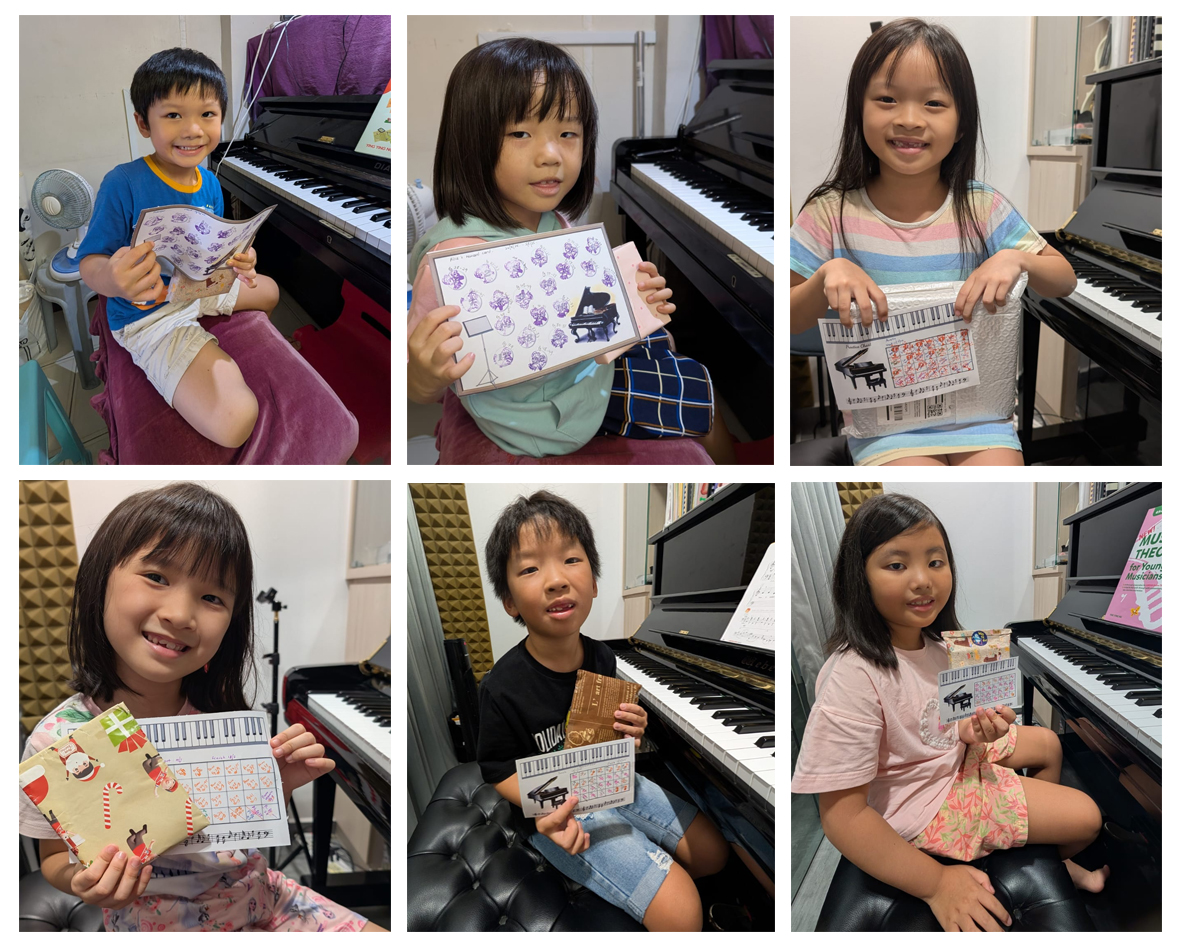
- Occasionally reward consistent practice with a new book, a piano-themed sticker, or a special outing.
Positive reinforcement builds confidence and a sense of accomplishment.
🎭 5. Create Performance Opportunities
Children often practice more when they have a reason to share their music.
- Host mini-recitals at home for family or friends. <Aurelia playing the piano during NCS homecoming>
- Record videos to send to grandparents or upload to a private YouTube channel.
- Join community events or casual music gatherings where they can perform in a low-pressure setting. <Aurelia playing for her sch talentime>
Performing for joy—not judgment—helps children feel proud of their efforts.
🧘♀️ 6. Respect Their Pace and Personality
Not every child is a budding concert pianist—and that’s okay.
- Some children thrive with structure; others need more freedom. Observe what works best for your child.
- Talk openly about their feelings toward piano. Are they bored? Overwhelmed? Curious?
- Collaborate with their teacher to adjust goals and repertoire to suit their interests.
When children feel heard and supported, they’re more likely to stay engaged long-term.
🎁 Final Thoughts
Motivating your child to practice piano without exams is entirely possible—and often more sustainable. By nurturing their love for music, celebrating their individuality, and making practice meaningful, you’re planting the seeds for a lifelong relationship with the piano.
After all, the goal isn’t just to raise a good pianist—it’s to raise a child who finds joy, confidence, and creativity through music. 🎵
You might also like to read
Common Misconceptions About Learning Piano
Check out my past-year student concerts and performances
| Home | Announcements | My Profile | FAQ | Fees | Articles | About Exams | Contact Me | Links | Gallery | Resources | Student Concerts | Student’s Achievements | Piano Studio Rental | Sitemap |
 My Piano Teacher